Should You Repair or Replace Your Masonry Steps?
Repair or Replace? Start With What Your Masonry Steps Are Telling You
A crumbling mortar joint or chipped tread can make an otherwise welcoming entrance feel neglected. But damage on the surface does not automatically mean the whole staircase needs to come down. For many Sussex County homeowners, the smarter question is whether the steps can be repaired in a way that actually lasts.
A dependable answer considers the size of the damaged area, how the steps move under ordinary use, where water travels, and whether the structure beneath the finish remains stable. What looks like one loose brick could be an isolated repair—or the first visible sign of a larger problem.
When Targeted Masonry Repairs Make Sense
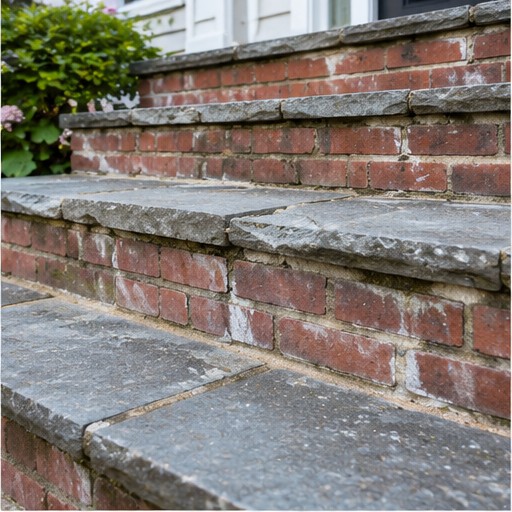
Repair is often reasonable when deterioration is localized and the surrounding masonry is sound. Repointing a few weathered mortar joints, resetting a single stable tread, or replacing a broken brick may restore the step without reconstructing everything around it.
The key is identifying why the material failed. Mortar can wear out through years of exposure, while movement beneath the stairs can open the same joint repeatedly. A proper repair addresses the cause, not merely the crack that made it noticeable.
Examples of Potentially Repairable Damage
- Small areas of deteriorated mortar with firm, aligned masonry around them.
- An individual chipped or damaged unit that can be replaced without disturbing otherwise stable work.
- A loosened cap or tread whose supporting surface can be evaluated and corrected.
- Limited surface wear that has not compromised the structure or walking surface.
These are clues, not a diagnosis from a photograph. A contractor still needs to examine the assembly and the conditions beneath the affected area.
When Rebuilding May Be the Better Decision
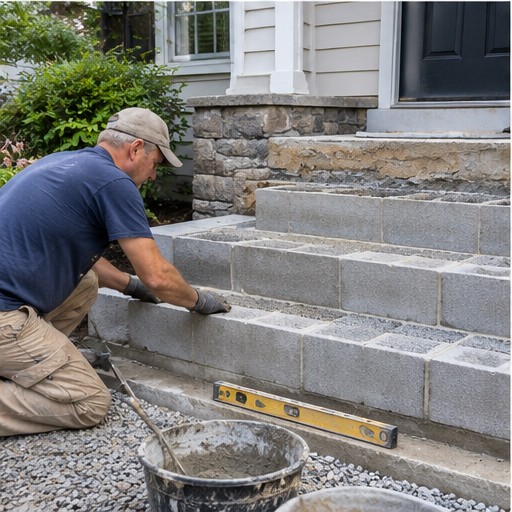
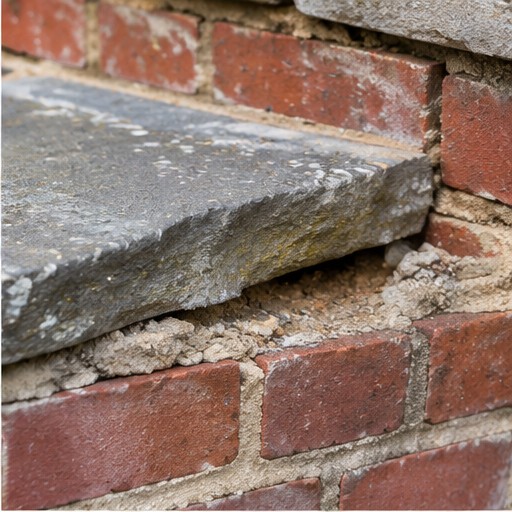
A full or partial rebuild becomes more likely when the problem extends beyond replaceable surface materials. Steps that settle, lean, separate from the house or landing, or show cracking through several connected areas can indicate that the supporting structure is no longer performing as intended.
Widespread loose bricks, multiple shifting treads, or extensive spalling also deserve careful evaluation. A fresh finish can make failing masonry look new temporarily, but it cannot make an unstable base sound.
Watch for noticeable differences in tread height or slope, persistent gaps between the steps and an adjoining walkway, and recurring movement after earlier repairs. Loose or rocking components can create fall risks; avoid deliberately testing questionable steps with your weight.
Why Moisture Changes the Equation
Exterior steps collect rain, melting snow and roof runoff. Water can enter open mortar joints and gaps around treads. When temperatures drop, repeated freeze-thaw cycles may enlarge existing weaknesses, while certain deicing products can accelerate deterioration of vulnerable surfaces.
That makes drainage part of the repair-or-replace conversation. If water repeatedly collects against a landing or enters behind the masonry, repairing the visible damage without changing the water path may leave the same problem in place.
Our Sussex County homeowner's guide to masonry steps takes a broader look at seasonal deterioration and winter exposure.
What You Can Observe Before an Evaluation
You do not need to take steps apart to prepare for a useful conversation. Photograph damaged joints, note whether cracks have changed over time, and observe where water travels during a normal rain. Compare the condition of the treads with the sidewalls and landing. If prior patching is visible, note when it was performed and whether the same problem returned.
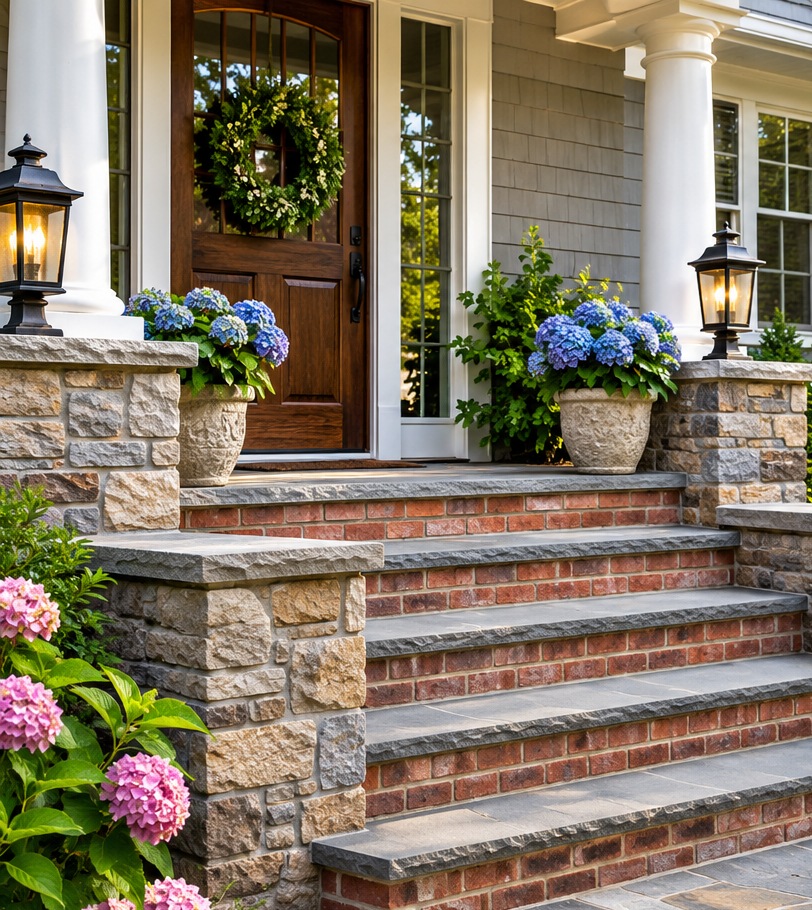
It also helps to think beyond the damaged spot. Do you want the same appearance restored, or would you prefer an entrance that coordinates better with existing siding, walkways or landscaping? Design goals can influence the scope once the structural condition is understood.
A Better Decision Starts With the Cause
A repair-first approach should never mean patching everything. And a replacement recommendation should not be automatic just because steps look old. The right solution matches the actual condition: localized work where the assembly is dependable, and rebuilding where instability or widespread deterioration makes a patch unreliable.
JW Construction evaluates masonry step repair and replacement with that distinction in mind. Understanding what is happening beneath the finish helps homeowners choose confidently instead of paying for work that does not address the problem.
Homeowner Questions About Masonry Steps
Can cracked masonry steps be repaired without replacing them?
Often, yes, when the cracking is localized and the underlying masonry remains stable. The cause of the crack should be identified before repairs are selected.
Does a loose tread always mean rebuilding the steps?
Not always. An isolated tread may be reset or replaced if its supporting structure is sound. Multiple shifting components or ongoing movement require a wider evaluation.
Why do repaired joints sometimes crack again?
Recurring cracks can reflect trapped moisture, settlement or ongoing movement that a surface patch did not resolve.
Can winter damage make replacement more likely?
Repeated moisture exposure and freeze-thaw cycles can worsen existing defects. The extent of structural damage, not winter alone, determines whether rebuilding is appropriate.
How do I know which approach makes sense for my home?
A site evaluation that considers stability, drainage, the extent of damage and long-term repair reliability is the best starting point.
Find Out What Your Steps Actually Need
Before committing to a full rebuild—or another short-lived patch—have the condition of your steps evaluated. JW Construction can review the visible damage and the conditions behind it to discuss whether a dependable repair is practical or rebuilding is the better long-term decision.
Explore masonry step repair and replacement services.
Continue Exploring Masonry Steps

Who We Are
Serving Sussex County, NJ for over 25 years, JW Construction specializes in residential concrete and masonry projects built around quality craftsmanship and lasting results.
Concrete and masonry are not just services we offer — they are what we do best!
From patios to pool decks, walkways, and retaining walls, every project is completed with careful planning, proper preparation, and attention to the details that make a difference.